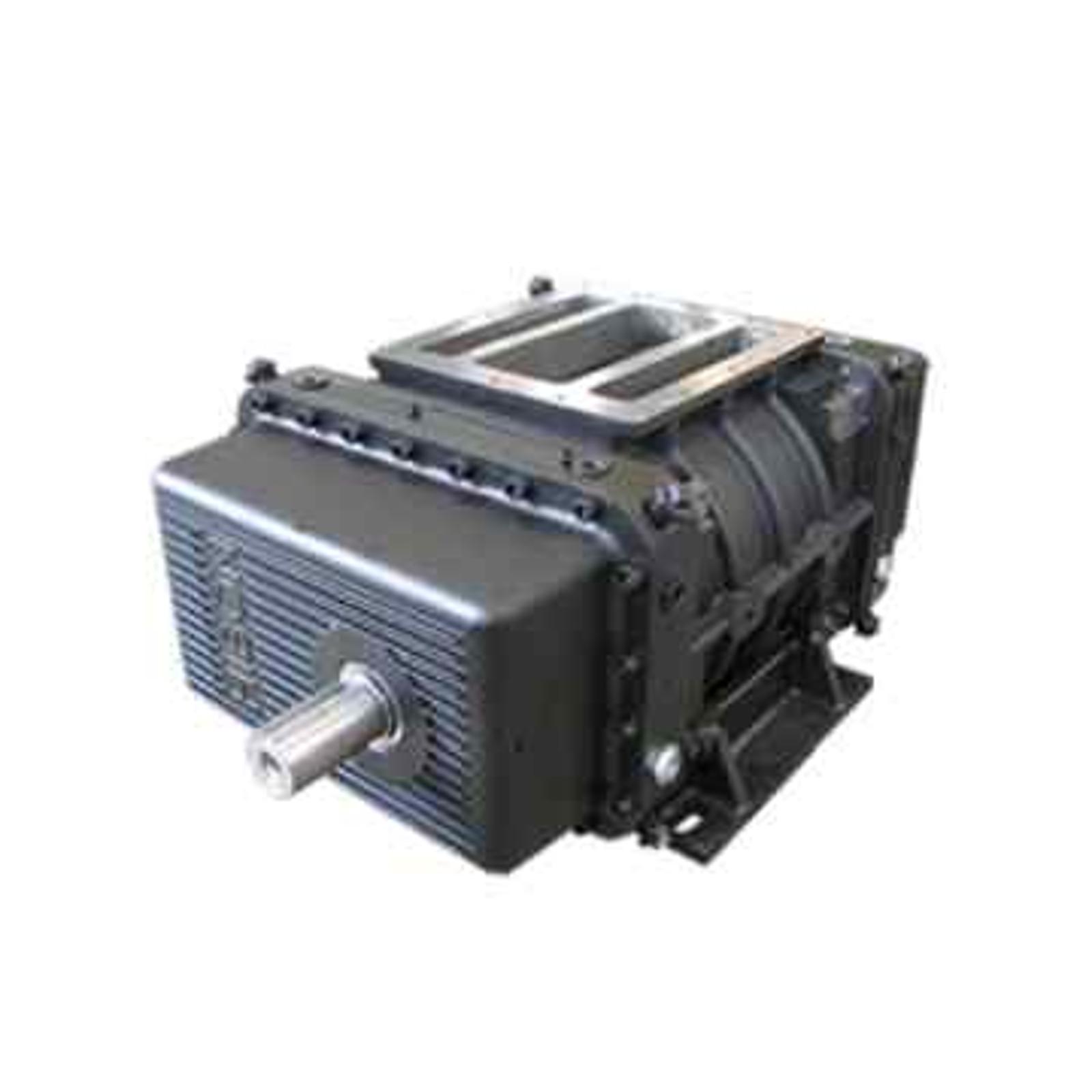

The VTB.XL Series provides different performance ranges for different vacuum-truck requirements. 

The technical catalog includes individual performance tables for the: 

VTB 805.XL, VTB 807.XL, VTB 810.XL, VTB 820.XL and VTB 822.XL. 

Each table provides model-specific information including: 

  • RPM
  • Vacuum level
  • CFM
  • BHP
  • Blanked-off vacuum
  • Physical dimensions
  • Mounting information
  • Available configurations

These tables should be used when determining the exact blower operating point for an application. 

VTB XL Series Catalog

A Better Way to Compare Vacuum Truck Blowers

When evaluating a high-vacuum blower, work through the application in this order:

Application → Required airflow → Required vacuum → Duty cycle → Operating speed → Power requirement → Installation → Operating environment

Once those requirements are understood, individual blower performance curves can be compared against the actual operating point.

This approach provides considerably more information than comparing maximum CFM ratings alone. 

What to Consider When Vacuum, Airflow, Duty Cycle and Operating Conditions All Matter

Vacuum truck applications can place very different demands on a blower. 

Recovering drilling mud, cleaning an oil storage tank, hydro excavating or handling material in an industrial vacuum application can require sustained airflow and vacuum while exposing equipment to demanding operating conditions. 

That means blower selection should go beyond asking: 

“How much CFM does it produce?” 

Airflow matters, but so do the required vacuum level, operating speed, power demand, duty cycle, system design and conditions the equipment will encounter in the field. 

Understanding those factors can help truck builders, fleet operators and equipment owners select a blower that matches the application instead of simply selecting the largest available model.

Why High-Vacuum Applications Put Different Demands on a Blower

Vacuum truck blowers do not operate in isolation. 

The blower is part of a system, and the conditions at which that system operates determine what the blower is being asked to do. 

Applications such as: 

  • Vacuum drilling mud
  • Oil storage tank cleanouts
  • Industrial vacuuming
  • Hydro-excavating
  • Agricultural vacuuming

can involve low-pressure, high-vacuum and abrasive operating conditions. 

The challenge is therefore not simply generating vacuum. The blower needs to deliver the required performance consistently while operating within its intended limits. 

That makes several factors important during selection. 

1. Start With the Required Airflow

Airflow is one of the first specifications considered when selecting a vacuum blower, but the required CFM should be evaluated at the actual operating condition rather than as a standalone maximum number.

The Hibon VTB.XL Series spans several blower sizes, providing different displacement capacities for different system requirements.

Volume displacement at maximum speed as listed in the VTB.XL Series catalog. Actual performance varies with operating speed and vacuum condition.

The progression from the VTB 805.XL through the VTB 822.XL gives system designers options across substantially different airflow requirements.

But maximum displacement should only be the beginning of the selection process. 

vtb xl positive displacement truck blowers vacuum pump sewer treatment applications

2. Match Airflow to the Required Vacuum Level

A blower does not produce the same airflow and require the same power at every vacuum condition. 

The VTB.XL performance tables illustrate this relationship by showing CFM and BHP across different RPM and vacuum levels. That distinction is important. 

A truck requiring a particular airflow at 9 inHg is operating under a different condition than a system expected to provide performance at 18, 21 or 24 inHg. 

Rather than selecting a blower from its maximum displacement alone, identify: 

Required airflow → Required vacuum → Operating speed → Required power 

and evaluate those values together. 

This provides a much more useful operating point for blower selection.

3. Understand Continuous vs. Intermittent Operating Conditions

Another specification that can easily be overlooked is whether a particular operating point is intended for continuous or intermittent use. 

The VTB.XL Series is designed for continuous-duty operation, but individual performance-table points still need to be evaluated carefully. 

Certain higher-vacuum operating points in the catalog are specifically identified as: 

Intermittent use only! 15 minutes per hour. 

That distinction matters when designing equipment expected to spend long periods under demanding vacuum conditions. 

A blower may technically reach an operating point, but that does not automatically mean that condition is intended for continuous operation. 

When comparing blowers, ask not only: “Can the blower reach this vacuum?” 

but also: “Can it operate at the airflow and vacuum I need for the amount of time my application requires?” 

4. Consider How Heat Is Managed

Vacuum generation and operating conditions can create significant thermal demands. 

This becomes increasingly important as vacuum requirements increase or operating cycles become longer. 

The Hibon VTB.XL Series uses an air-injected positive displacement design. The catalog combines this air-injection system with a three-lobe impeller to support efficiency, reliability and demanding high-vacuum operation. 

The series also operates without auxiliary fluids, reducing maintenance complexity associated with additional fluid systems. 

For equipment designers and fleet operators, the broader consideration is simple: How does the blower system support the operating conditions required by the application? 

Heat management should therefore be considered during system design, not only after the equipment enters service.

5. Look Beyond Vacuum to Power Requirements

More vacuum does not come without system consequences. 

The VTB.XL performance tables provide both CFM and brake horsepower (BHP) because power requirements change with operating conditions. 

This information is critical when matching the blower to: 

  • The truck’s available power
  • The selected drive arrangement
  • Expected operating speed
  • Required vacuum
  • Required airflow

Selecting from CFM alone can overlook whether the truck and drive system can efficiently support the desired operating point. 

This is another reason blower selection should be based on the complete performance curve rather than a single headline specification. 

6. Account for Installation Requirements

Blower performance matters, but the blower also has to fit the truck. 

System designers need to account for physical dimensions, mounting arrangement, shaft orientation, airflow direction and rotation. 

The VTB.XL Series catalog provides multiple configuration possibilities, including variations in: shaft position, shaft side, rotation, airflow direction and air-injection arrangement. 

This flexibility allows the blower configuration to be considered as part of the overall truck layout. 

However, exact dimensions and configuration information should always be confirmed against the technical documentation for the selected model. 

7. Consider the Material and Operating Environment

Vacuum trucks frequently operate in environments where recovered material and operating conditions can be demanding on equipment. 

The VTB.XL Series is specifically positioned for harsh vacuum-truck applications and is designed to handle abrasive materials without premature wear. 

That becomes relevant in applications such as drilling mud recovery, industrial vacuuming and hydro excavation, where the operating environment can be just as important as the target vacuum level. 

Blower selection should therefore consider both: the performance the truck needs and the environment in which that performance must be delivered.

Which VTB.XL Blower Size Is Right for the Application?

The five VTB.XL models cover a broad displacement range: 

VTB 805.XL → VTB 807.XL → VTB 810.XL → VTB 820.XL → VTB 822.XL 

Moving to a larger model increases available displacement, but bigger is not automatically better. 


The appropriate blower depends on the required operating point. 

For example, a system designer should establish the required airflow and vacuum before determining whether the application needs the capacity of a VTB 805.XL, VTB 820.XL or VTB 822.XL. 


Oversizing without considering operating conditions, power and system design does not replace proper blower selection. 

Country

Industry

Your request will be forwarded to the relevant individuals to assist with your request.
By clicking 'Send' you are authorizing Generic Brand to contact you so that we may fulfill your request, as well as to communicate with you regarding our products and services.
Terms and Conditions
Privacy Policy

(* required fields)

This site is protected by reCAPTCHA.

Frequently Asked Questions

The VTB.XL Series is an air-injected positive displacement blower designed for low-pressure, high-vacuum vacuum-truck applications. It combines a three-lobe impeller with Hibon’s air-injection system for demanding operating conditions. 

Reach Out to Us